
By NewsWaveUSA Team | Published: November 29, 2026 · 2:50 AM ET | Last updated: November 29, 2026 · 2:50 AM ET
Source: BBC News
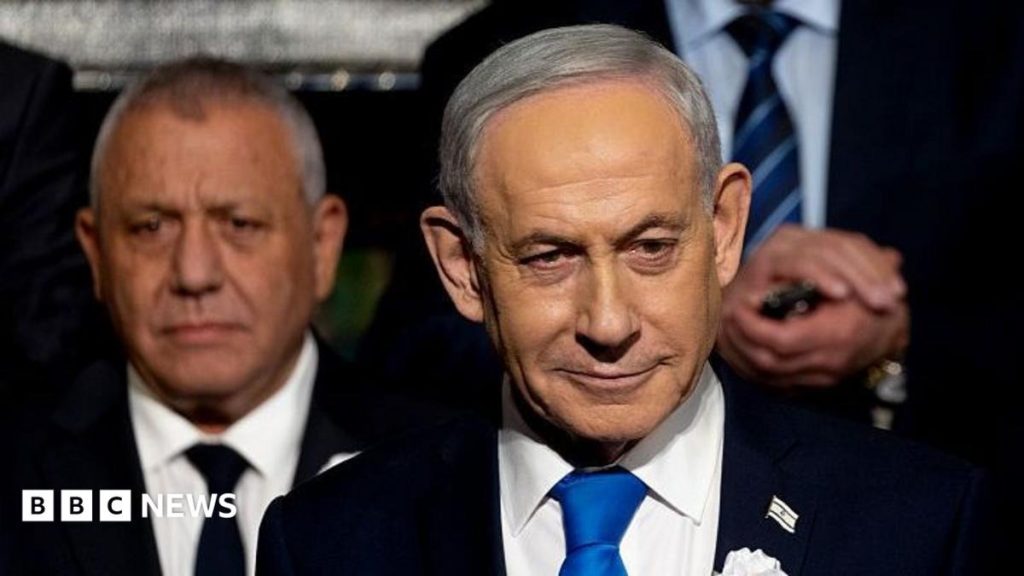
Israel’s caretaker premier Benjamin Netanyahu will sit down with opposition leader Gadi Eisenkot on Sunday in a last‑ditch effort to untangle the stalemate that followed October’s inconclusive election. Netanyahu has signaled willingness to let Eisenkot serve as prime minister first in a rotating national‑unity cabinet, a move that could finally give the fragmented Knesset a working majority.
Election results left no clear winner
The October vote produced a deeply divided parliament. Netanyahu’s right‑wing bloc secured 53 of the 120 seats, while Eisenkot’s centrist Yashar party and three allied Jewish parties together captured 48. Both fell short of the 61 seats needed for a governing majority, thrusting the country into a caretaker mode as parties scrambled to forge a coalition. President Isaac Herzog, after consulting all factions, granted Eisenkot a 28‑day window to assemble a government, with a hard deadline of 6 December.
Rotating premiership on the table
In a social‑media post on Saturday, Netanyahu wrote that his “responsibility as a leader obligates me to put everything aside, including the principle of the largest party.” He added he would initially serve as an “alternate prime minister” under a rotating arrangement. Eisenkot, a former army chief, responded quickly, inviting “genuine and accelerated negotiations” and insisting that any deal must be based on a detailed proposal his team sent the previous Sunday. To date, his camp says it has not received a reply.
Arab parties emerge as potential kingmakers
A surge in Arab‑voter turnout produced an unprecedented 19 seats for the United Arab List and the Joint List combined. Although all but one of the Jewish parties pledged before the election to refuse cooperation with Arab factions, the numbers have thrust the Arab blocs into a pivotal position. Mansour Abbas, leader of the moderate Islamist Raam party, told Channel 12 that his party now recognises Hamas as a “terror group,” a stance that could open the door for Raam to join a coalition and help unseat Netanyahu.
Coalition building in motion
Eisenkot has already secured agreements with Yisrael Beiteinu and The Democrats, moving him closer to the 61‑seat threshold. The fourth component of his bloc, the Beyachad party led by former prime minister Naftali Bennett, has signalled openness to a unity government that places Eisenkot at the helm first. Bennett praised Netanyahu’s recent overture, calling it “the right decision” and describing the prospective cabinet as “an alliance of those who serve.”
Stalled talks and mounting pressure
The past two weeks have seen Eisenkot accuse Likud of “stalling” and of failing to present concrete proposals. Netanyahu’s Sunday offer arrived just hours after those accusations, prompting Eisenkot to ask whether Likud is serious about negotiations. “If Likud is ready for genuine unity, I am ready to assess the seriousness of its intentions over the next 24 hours,” Eisenkot said, underscoring the urgency of reaching a deal before the December deadline.
Israel has never produced a single‑party majority; every government since 1996 has been a coalition. Between 2019 and 2022, five elections were held as Netanyahu and his rivals repeatedly failed to bridge divides. With regional security concerns mounting and internal pressures rising, both sides appear increasingly aware that a fragmented Knesset cannot effectively address what Netanyahu described as “the magnitude of the existential danger” facing the nation.
The Sunday meeting could be the decisive moment that ends weeks of political gridlock, but whether the parties can translate rhetoric into a functional coalition remains to be seen.
Source: BBC News
Spotted an error? Report an error or use our contact form | Corrections policy