
By NewsWaveUSA Team | Published: November 26, 2026 · 11:34 PM ET | Last updated: November 26, 2026 · 11:34 PM ET
Source: The Guardian
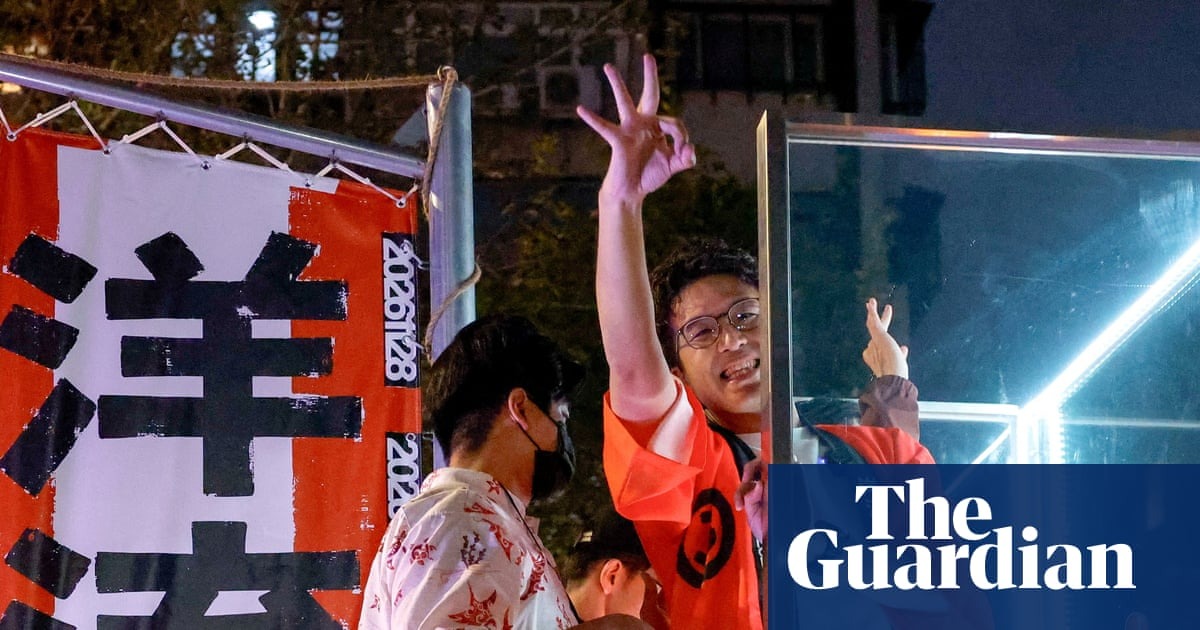
Taiwan’s local elections on Saturday will decide mayors, councilors and other officials across 22 districts, a contest that could reshape the ruling Democratic Progressive Party’s (DPP) standing at a time when Beijing’s pressure is intensifying. While the races focus on everyday concerns such as housing and wealth distribution, the shadow of China looms large, with officials warning of misinformation, harassment and AI‑generated disinformation aimed at candidates seen as hostile to the mainland.
Local contests with national implications
The vote, held every four years, is traditionally a barometer for local governance rather than foreign policy. Yet analysts say the outcomes will reverberate beyond municipal budgets. “Even though local elections are not about China, the outcome of local elections will have huge implications for cross‑strait relations,” said Wei‑Ting Yen, a political scientist at Academia Sinica. The DPP faces stiff competition from the Kuomintang (KMT), which advocates closer ties with Beijing. The two parties are neck‑and‑neck in most of the 22 districts, making every mayoral and council race a potential swing point.
Beijing’s covert campaign
China maintains that Taiwan is a renegade province and has never ruled the self‑governing island. In the weeks leading up to the polls, Taiwanese authorities reported thousands of incidents they label as suspected misinformation or election interference. They also documented hundreds of AI‑generated videos spreading false narratives about politicians disliked by the mainland. A spokesperson for China’s Taiwan affairs office, Zhu Fenglian, dismissed the claims as “completely fabricated,” adding that the allegations “stir up anti‑China sentiment to win votes.” The Chinese government has repeatedly warned that unification remains a goal, with President Xi Jinping refusing to rule out the use of force.
Sanctioned candidates step into the arena
The most high‑profile contest is the Taipei mayoral race, a seat the KMT held for three decades. The DPP has nominated national legislator Puma Shen, whom Beijing branded a “diehard separatist” in 2024 and placed under sanctions. Shen’s candidacy marks the first time a Beijing‑sanctioned figure has run for the capital’s top office. “Even if I don’t win, the capital’s mayoral race is a slap to China because it proves that democracy works here in Taiwan,” Shen told reporters. In nearby New Taipei City, DPP challenger Su Chiao‑hui is also mounting a fierce challenge to the incumbent KMT mayor, underscoring the party’s broader push to break the KMT’s stronghold on the island’s largest municipalities.
Voter anxiety amid great‑power rivalry
Young voters are keenly aware that Taiwan’s domestic choices intersect with global power dynamics. Huang Bo‑kai, a 23‑year‑old law student, said his primary worry was the trajectory of cross‑strait ties and the evolving US‑China relationship. “The world’s three major powers are increasingly willing to flex their muscles: the US attacking Iran, Russia attacking Ukraine. I think Taiwan is caught in the middle of that tension,” he explained. For many, the election is a test of whether Taiwan can maintain its democratic course while navigating an increasingly assertive China and an unpredictable international environment.
The DPP hopes that victories in key municipalities will reinforce its mandate to resist Beijing’s overtures, while the KMT seeks to prove that engagement can temper cross‑strait friction. As polls close and results trickle in, the world will be watching how Taiwan’s local leaders shape the island’s future amid a backdrop of diplomatic strain and covert interference.
Source: The Guardian
Spotted an error? Report an error or use our contact form | Corrections policy